
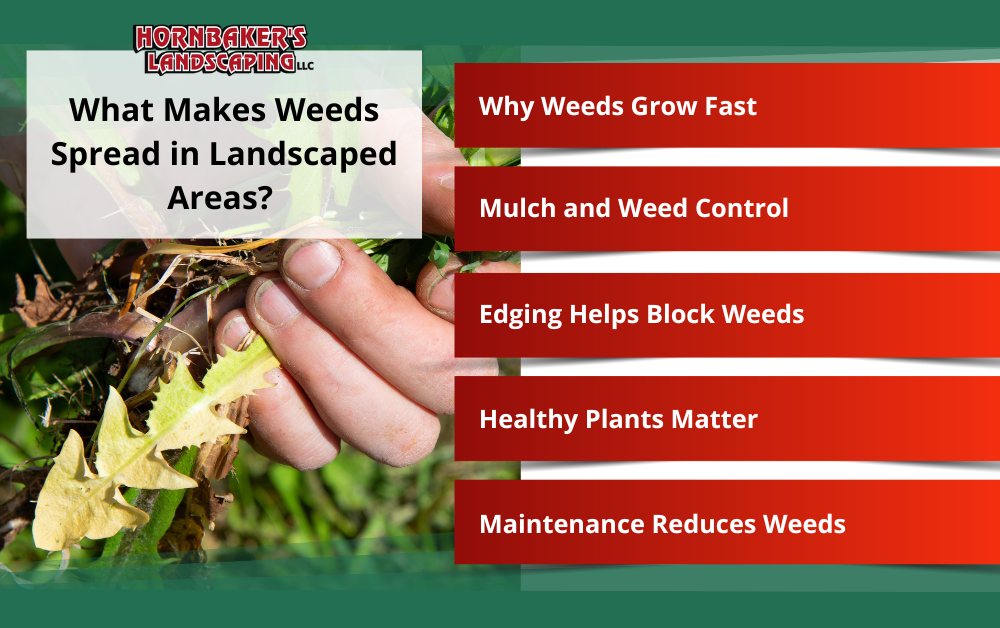
Landscaped areas can make a property look clean, colorful, and well cared for, but weeds can quickly change the appearance of those spaces. When they spread through mulch beds, around shrubs, along walkways, or near foundation plantings, they can make even a maintained yard look messy.
Weeds usually spread when the conditions are right. Open soil, sunlight, moisture, thin mulch, weak plant coverage, and inconsistent maintenance can all give weeds room to grow. Understanding why they appear in landscaped areas is the first step toward keeping beds cleaner, healthier, and easier to manage throughout the season.
Why Do Weeds Grow So Quickly in Landscape Beds?
Weeds grow quickly in landscape beds because they are good at taking advantage of open space. When soil is exposed, mulch is thin, or plants are spaced far apart, weed seeds have a better chance of settling in and growing. Once they receive enough sunlight and moisture, they can begin spreading through the bed.
Landscape beds can also collect weed seeds from several sources. Seeds may blow in from nearby lawns, fields, sidewalks, or neighboring properties. They can also be carried by birds, animals, shoes, lawn equipment, or stormwater. Even a clean-looking bed can develop weeds if seeds find the right place to take root.
Common reasons weeds grow in landscape beds include:
- Bare or exposed soil
- Thin or aging mulch
- Weed seeds carried by wind, birds, or foot traffic
- Moisture from rain or irrigation
- Gaps between plants
The longer weeds are left alone, the more difficult they can be to manage. Some spread by seed, while others spread through roots or runners beneath the surface. Removing them early can help prevent a small problem from turning into a larger one.
Can Mulch Help Stop Them From Spreading?
Mulch is one of the most helpful ways to slow the spread of weeds in landscaped areas. A fresh, even layer of mulch helps block sunlight from reaching weed seeds in the soil. Without enough sunlight, many seeds have a harder time sprouting and growing through the bed.
Mulch also helps landscape beds look cleaner and more finished. It can protect soil moisture, reduce erosion, and create a better visual separation between plants and open ground. This makes the area look more maintained while also helping limit some of the conditions they need to spread.
However, mulch does not stop them completely. If the mulch becomes too thin, compacted, uneven, or washed away, weeds may still break through. Refreshing mulch when needed and keeping landscape beds maintained can help reduce weed growth and keep the property looking cleaner throughout the season.
How Do Poor Edging and Open Borders Lead to More Weeds?
Poor edging and open borders can make it easier for weeds to move into landscaped areas. When there is no clear separation between the lawn and the landscape bed, grass and unwanted plants can creep into mulch, around shrubs, and along planting areas. Over time, this can make the bed look less defined and harder to maintain.
Weeds can also spread from nearby sidewalks, driveways, fence lines, and open soil. Small gaps along these edges often collect dirt, moisture, and seeds, giving them a place to grow. Once they take hold, they can continue spreading into the surrounding landscape if they are not removed.
Clean edging helps create a stronger boundary between the lawn and the landscape bed. It improves the appearance of the property while also making maintenance easier. With defined edges, it is simpler to spot new growth, remove weeds early, and keep beds looking neat throughout the season.
Why Does Plant Health Matter for Weed Control?
Plant health plays an important role in controlling weeds because strong, full landscape plants leave less open space for unwanted growth. When shrubs, perennials, ground covers, and other plants are healthy, they can help shade the soil and reduce the amount of sunlight that reaches weed seeds.
Weak or sparse plantings often create more room for weeds to grow. If plants are struggling, spaced too far apart, or not maintained properly, the exposed areas between them can become easy places for weeds to take root. Overgrown plants can also create hidden spots where they are harder to notice until they have already spread.
Regular plant care can help landscaped areas stay healthier and easier to manage. Trimming, pruning, watering properly, and removing dead or damaged growth all help support a cleaner landscape bed. When the intended plants are thriving, weeds have fewer opportunities to take over.
How Can Regular Landscape Maintenance Reduce Weeds?
Regular landscape maintenance is one of the best ways to keep weeds from becoming a larger problem. When they are removed while they are still small, they are less likely to develop deep roots, spread seeds, or grow into surrounding plants. Waiting too long can make them harder to remove and more noticeable throughout the landscape bed.
Consistent maintenance also helps keep the conditions around your plants under control. Beds that are cleaned, edged, and refreshed as needed are less likely to give weeds open space to spread. This is especially important during the growing season, when rain, sunlight, and warm temperatures can help weeds appear quickly.
Helpful maintenance tasks include:
- Pulling weeds before they seed
- Refreshing mulch when needed
- Maintaining clean bed edges
- Trimming overgrown plants
- Removing debris from beds
- Monitoring problem areas after rain
With routine care, landscaped areas can stay cleaner, healthier, and easier to manage. Professional landscape maintenance from Hornbaker’s Landscaping can help homeowners keep beds looking neat while reducing the conditions that allow weeds to spread.
Keep Weeds From Taking Over Your Landscape
Weeds spread when landscape beds give them the space, sunlight, moisture, and open soil they need to grow. Thin mulch, weak plant coverage, poor edging, and inconsistent maintenance can all make the problem worse over time.
The good news is that weeds can be managed with the right landscape care. Fresh mulch, clean bed edges, healthy plantings, and routine maintenance can help keep outdoor spaces looking cleaner throughout the season. If weeds are becoming a problem in your landscape beds, contact Hornbaker’s Landscaping for professional landscaping and maintenance services.