
Spring is the season of fresh starts, and that includes your outdoor space. As temperatures begin to warm up, homeowners start planning how their yards will look and function in the months ahead. If you have been considering upgrades, now is the ideal time to explore the latest landscaping design trends for 2026.
Landscaping design has evolved beyond simple curb appeal. Today’s outdoor spaces are designed to be beautiful, functional, and built to handle changing seasons. From expanded patios and modern walkways to smarter planting layouts and upgraded outdoor living areas, this year’s trends focus on creating spaces that feel like a natural extension of your home while adding long term value to your property.
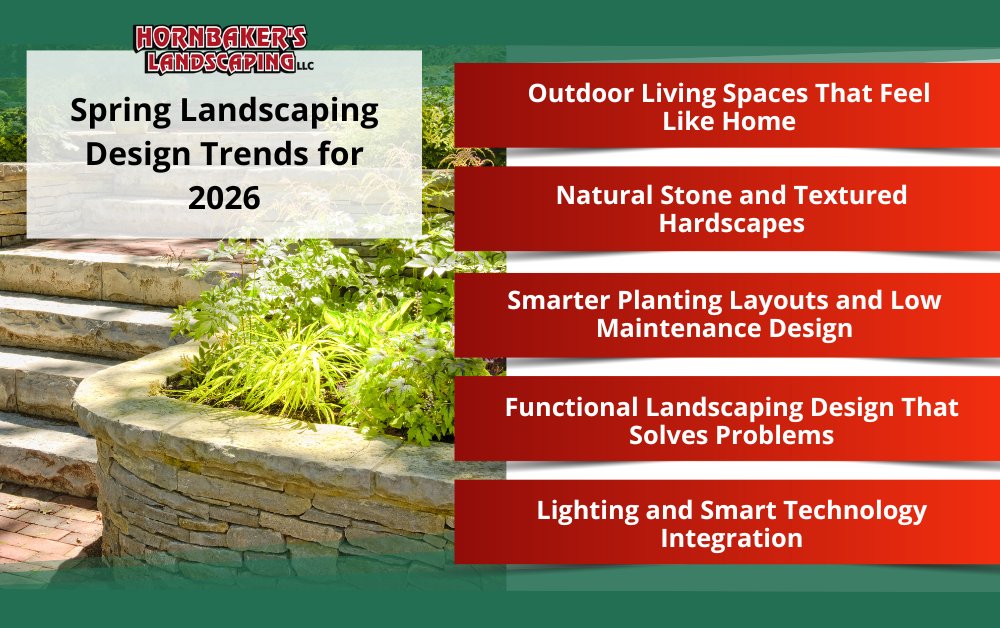
Trend #1 – Outdoor Living Spaces That Feel Like Home
Outdoor living continues to lead the way in landscaping design for 2026. Homeowners are moving beyond basic patios and creating outdoor environments that feel intentional and inviting. Instead of placing a table and grill on a concrete pad, today’s designs focus on shaping the yard into usable “rooms” that support relaxation, connection, and everyday life.
This year, we are seeing a stronger emphasis on defined zones within one cohesive layout. A well planned outdoor space may include:
- A dedicated dining area with enough room for hosting
- A lounge space anchored by a fire pit or fireplace
- Built in seating walls for structure and convenience
- Pergolas or covered areas that add comfort and dimension
These elements work best when they are designed together rather than added over time. Proper landscaping design ensures the patio size, placement, and flow make sense in relation to the home and surrounding yard.
The key difference in 2026 is intentionality. Homeowners want their outdoor spaces to function as a true extension of their home, not an afterthought. That requires thoughtful layout planning, proper grading, and material choices that support long term durability. When designed correctly, an outdoor living space does more than improve curb appeal. It increases how often you use your yard and how much value it adds to your property
Trend #2 – Natural Stone and Textured Hardscapes
Landscaping design in 2026 is leaning heavily into natural materials and richer textures. Clean, modern lines are still popular, but they are being softened with stone that feels authentic and timeless. Homeowners are choosing materials that blend with the environment rather than compete with it, creating patios and walkways that look established and intentional.
Instead of uniform surfaces, textured finishes and mixed materials are taking center stage. Natural stone patios, tumbled pavers, and decorative stone accents add character and dimension. Larger paver formats are also trending because they create a sleek look while minimizing visual clutter. When paired with contrasting borders or subtle pattern changes, these hardscapes add depth without overwhelming the overall design.
Beyond appearance, performance matters. Quality landscaping design accounts for proper base preparation, grading, and drainage to ensure patios and walkways withstand seasonal temperature shifts and moisture changes. The result is a hardscape that not only looks refined on installation day, but continues to perform beautifully for years to come.
Trend #3 – Smarter Planting Layouts and Low Maintenance Design
Planting design in 2026 is becoming more strategic and less cluttered. Instead of scattering shrubs and flowers throughout the yard, landscaping design now focuses on layered layouts that create depth, balance, and year round interest. This means thinking about how plants look not only in spring, but through summer heat, fall color, and winter structure.
Layering is a major part of this trend. A well designed planting bed often includes:
- Taller anchor plants or ornamental trees for height
- Mid level shrubs that add fullness and privacy
- Lower perennials and groundcover for texture and seasonal color
- Defined bed edges for a clean, polished finish
This structured approach makes landscapes look professionally designed rather than randomly planted.
Low maintenance is another priority. Homeowners are requesting plant selections that are durable, climate appropriate, and easier to care for. Strategic spacing reduces overcrowding, proper mulching improves soil health, and thoughtful placement minimizes long term pruning needs. Smart landscaping design is not just about beauty in the first season. It is about creating a landscape that matures gracefully and remains manageable for years to come.
Trend #4 – Functional Landscaping Design That Solves Problems
In 2026, landscaping design is not just about appearance. Homeowners are prioritizing function just as much as aesthetics. Yards are being designed to solve real property issues such as drainage problems, erosion, uneven grading, and water runoff. Instead of treating these concerns separately, they are being integrated into the overall landscape plan from the start.
Retaining walls, grading adjustments, and drainage systems are becoming central design features rather than hidden fixes. A well placed retaining wall can create usable yard space while also stabilizing soil. Strategic grading protects foundations and prevents pooling water. Drainage solutions such as swales or underground systems are now planned alongside patios and planting beds so the entire property works together efficiently.
This functional approach ensures that landscaping design improves both the look and the long term health of the property. When beauty and infrastructure are addressed at the same time, homeowners avoid costly repairs down the road. The result is a landscape that performs well in changing weather conditions while still delivering the curb appeal and outdoor enjoyment homeowners want.
Trend #5 – Lighting and Smart Technology Integration
Landscaping design in 2026 does not stop when the sun goes down. Outdoor lighting has become an essential part of the overall plan, not an afterthought added at the end. Homeowners want their landscapes to look just as inviting at night as they do during the day, while also improving safety and usability.
Strategic lighting placement highlights key features such as patios, walkways, trees, and architectural details. Path lighting improves visibility and reduces trip hazards. Uplighting adds drama to focal points like ornamental trees or stonework. When thoughtfully designed, lighting creates depth and warmth that transforms the entire feel of the yard after dark.
Smart technology is also playing a larger role in landscaping design. App controlled lighting systems, programmable irrigation, and energy efficient LED fixtures allow homeowners to manage their outdoor spaces with ease. These upgrades increase convenience, reduce water waste, and enhance overall performance. By integrating technology into the design phase, homeowners gain a landscape that is not only beautiful, but efficient and future ready.
Planning Your Spring Landscaping Design for 2026
The landscaping design trends for 2026 highlight a clear shift toward intentional outdoor spaces that blend beauty with function. From expanded living areas and natural stone hardscapes to structured planting layouts and integrated lighting, modern landscaping design focuses on creating yards that look refined while delivering long term performance and value.
If you are considering upgrades this spring, now is the time to plan. Contact Hornbaker’s Landscaping to schedule a consultation and start designing an outdoor space that enhances your property and supports the way you live.